Vegetated Roofs
Why Vegetated Roofs?
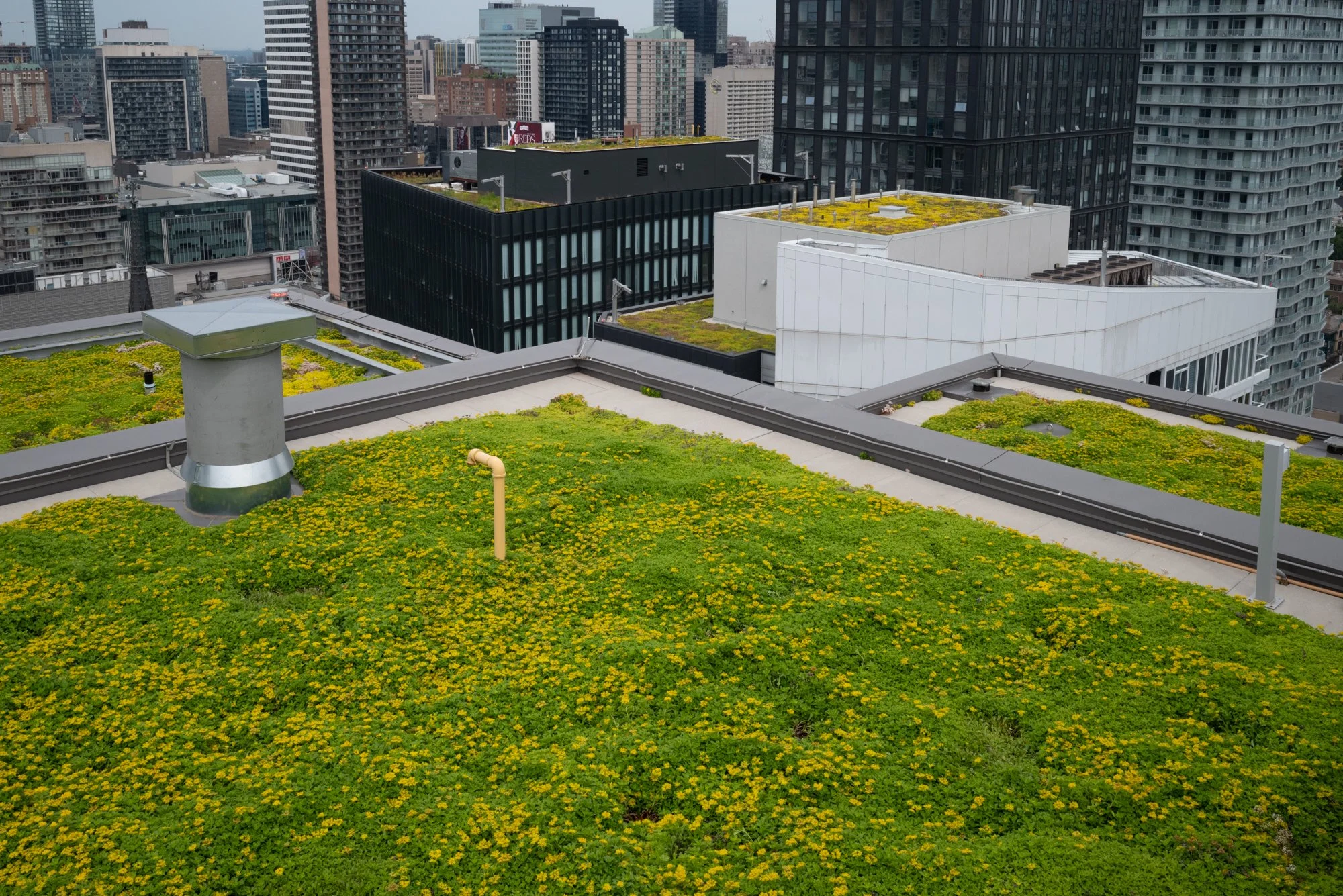
Vegetated Roofs are the installation of a thin layer of vegetation and growing medium on a flat or sloped rooftop, constructed to provide benefits to cities through the creation of a green space. This green space can be used to grow grasses, shrubs, perennials, trees and crop that have associated value-added products that can be used for economic feasibility while providing social, agricultural and environmental benefits.
In addition to green space, vegetated roofing systems provide an effective stormwater management solution by reducing both the volume and rate of runoff from impervious urban surfaces. The layered design, including vegetation, growing medium, and drainage systems, enables precipitation to be intercepted, retained, and gradually released, thereby delaying peak flows and alleviating pressure on municipal stormwater infrastructure.
Studies show that vegetated roofs can retain a substantial proportion of rainfall, with studies suggesting retention rates of up to 75% of stormwater, and reductions in total runoff of up to 60%, depending on design and environmental conditions. Similarly, peak flow discharge can be delayed by as much as 85%, improving downstream water quality and reducing the risk of flooding. This capability is particularly valuable in highly urbanized areas across Ontario, such as Toronto, where limited space constrains the use of conventional stormwater management systems, making green roofs a practical and multifunctional approach to managing urban runoff.
Vegetated Roof Systems
Vegetated roof systems are typically categorized into three main types: extensive, semi-intensive, and intensive, each defined by differences in depth, weight, maintenance needs, and functional performance.
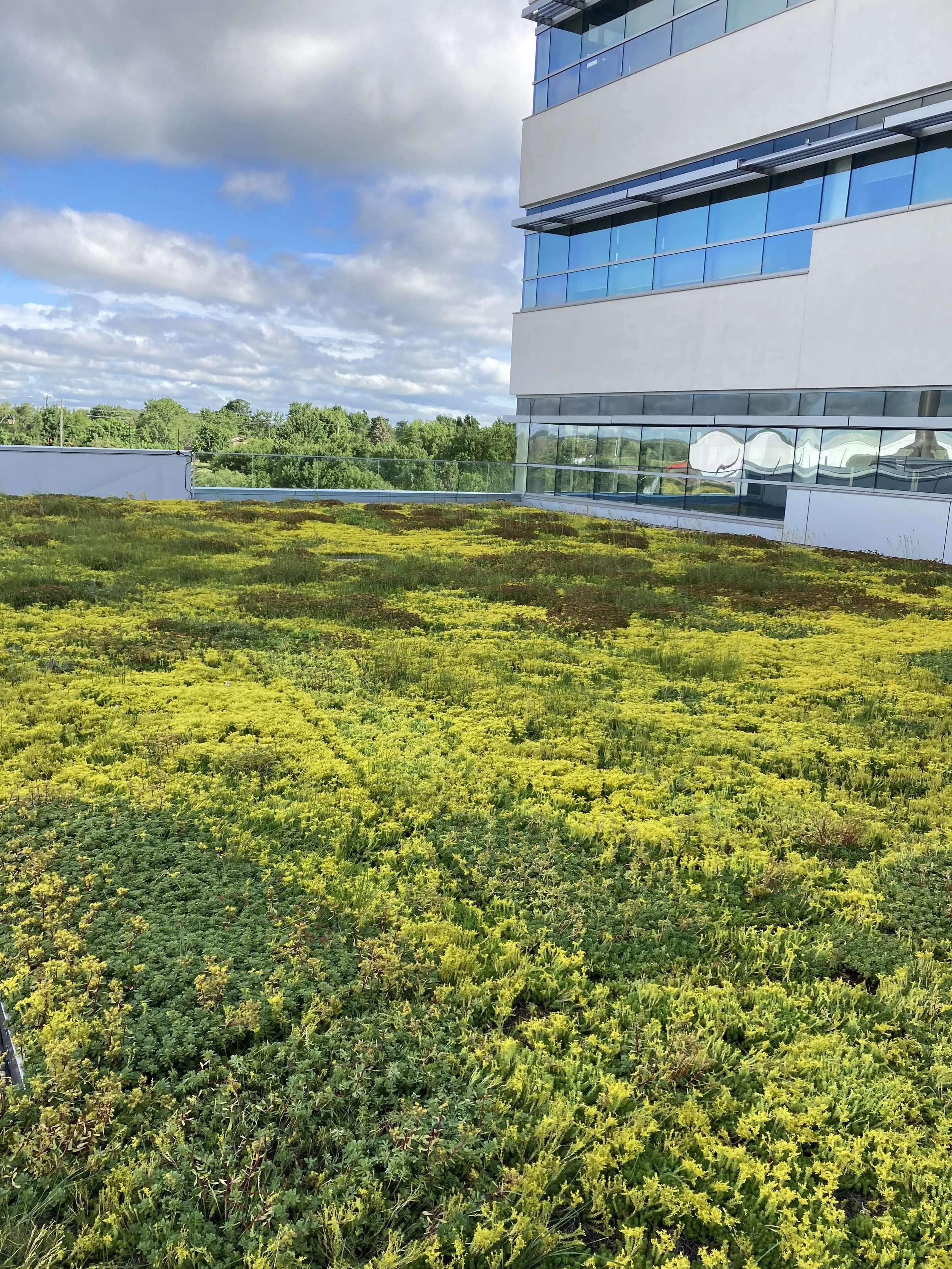
Extensive systems are the most lightweight, generally consisting of a shallow growing medium (typically less than 150 mm) and low-maintenance vegetation such as sedum, grasses, or mosses. These systems are usually inaccessible and are well-suited for large roof areas due to their lower structural requirements and costs, while still providing effective stormwater retention and environmental benefits.
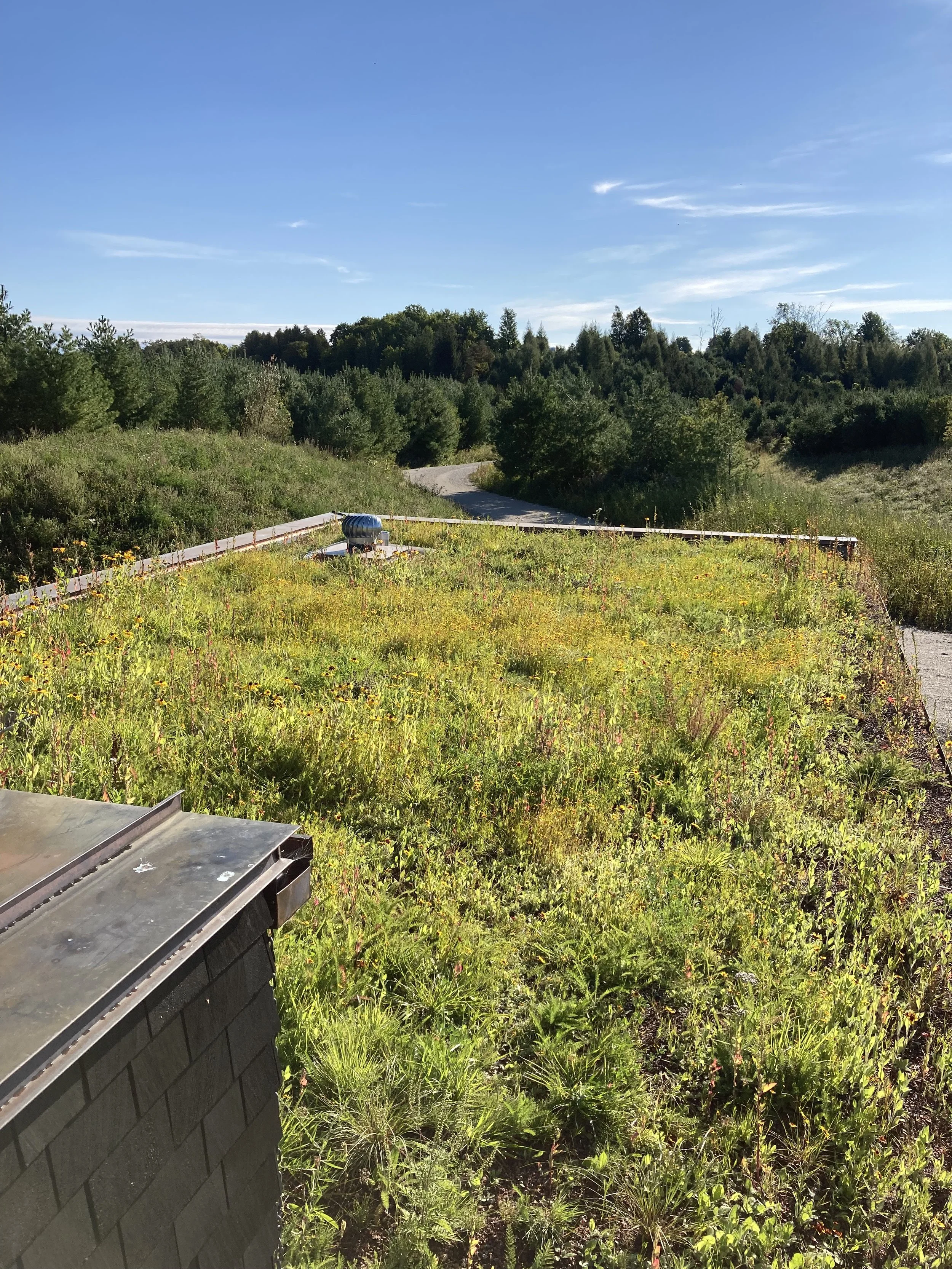
Semi-intensive systems represent a middle ground, with moderate soil depths and a greater diversity of plant species, including shrubs and herbaceous plants. They may be partially accessible and offer enhanced aesthetic and stormwater performance compared to extensive systems, but require more maintenance and structural support.
Intensive systems, by contrast, are the most complex and robust, featuring deep soil profiles, high structural loads, and the capacity to support a wide variety of vegetation, including trees and food crops. These roofs are often fully accessible and designed for amenity or urban agriculture purposes, offering the greatest stormwater retention capacity and ecological benefits, but also requiring the highest installation and maintenance costs.
Collectively, these system types provide a scalable approach to integrating green infrastructure into urban environments, allowing for flexibility based on building constraints and project objectives.
Benefits of Vegetated Roofing
Vegetated roofs offer many public, private, and design-based benefits. While there are similarities among vegetated roofing systems, each installation is unique, and therefore, technical performance details provided will vary by region, climate, building, design, and system type.
Community Health
The community health benefits are presented in the tabs below, outlining the opportunity for increases in community prosperity, sustainability, health, education, viability and livability, with the generation of a sustainable rooftop agricultural business.
-
Prosperous and sustainable benefits that can be obtained from rooftop gardens and urban agriculture, focusing on the financial and economic aspects of a community.
Vegetated roofs provide ecological incentives to building owners by increasing roof durability and reducing heating/cooling costs.
Urban agricultural incentives provide economic benefits to communities by boosting tourism and local employment.
Sustainability of the economy and environment can be achieved using vegetated roofs and rooftop gardens. Sustainable benefits include an increase in biodiversity, with respect to the diversity of vegetation in an urban area, as well as an increase in local food production and food security.
-
Vegetated roofs can provide social and educational benefits to a community.
Urban agriculture creates a local food system that increases health benefits of a community from eating local and organic produce. The act of growing, producing and distributing food locally can create a heightened sense of community and increases access to healthy food for households with low to moderate incomes.
Rooftop gardening and vegetated roofs create educational opportunities for local students to learn about sustainable gardening methods, including the importance of eating local, healthy, and organic. These gardens also provide opportunity for outdoor learning experiences and agriculture awareness without leaving an urban setting.
-
The viability of vegetated roofs and rooftop gardens considers the environmental benefits of reduced stormwater runoff and urban heat island effect, and improved air quality. In addition, a local food system lowers the GHG emissions related to the food sector.
Livability benefits include an increase in sound insultation for the building, as well as improved aesthetics and horticultural elements.